// the build
A look at the app.
// onboarding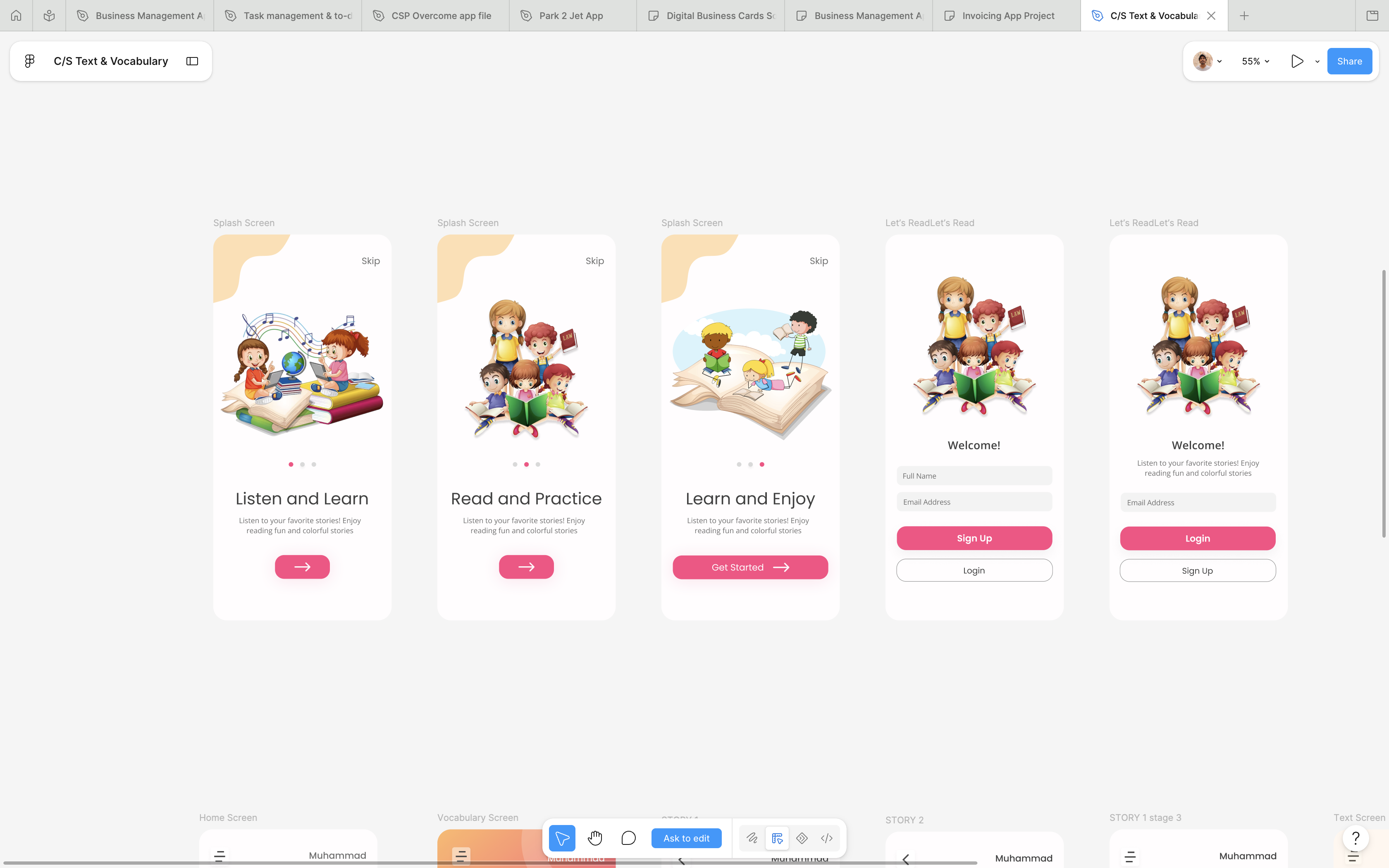
// vocabulary practice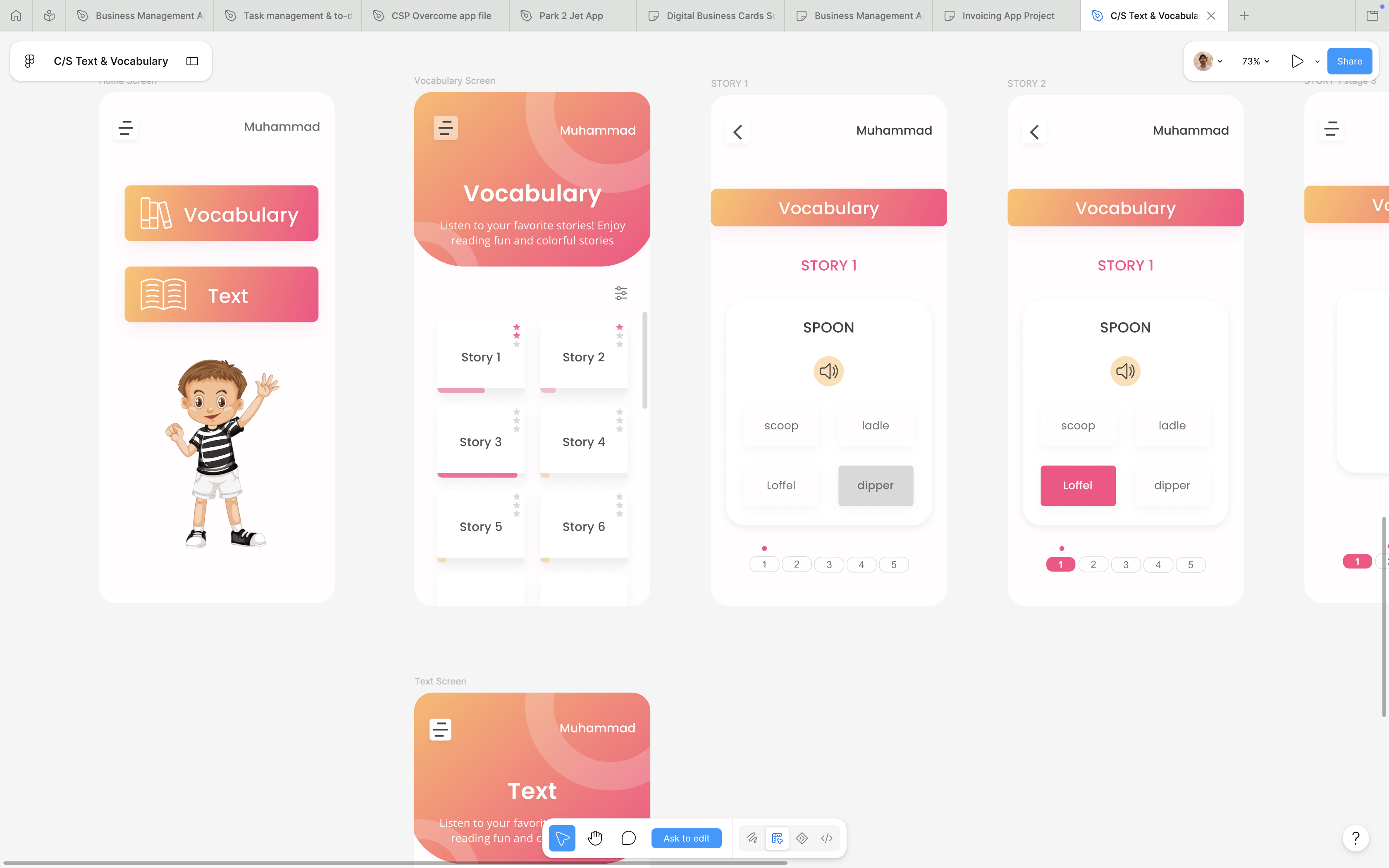
// story reading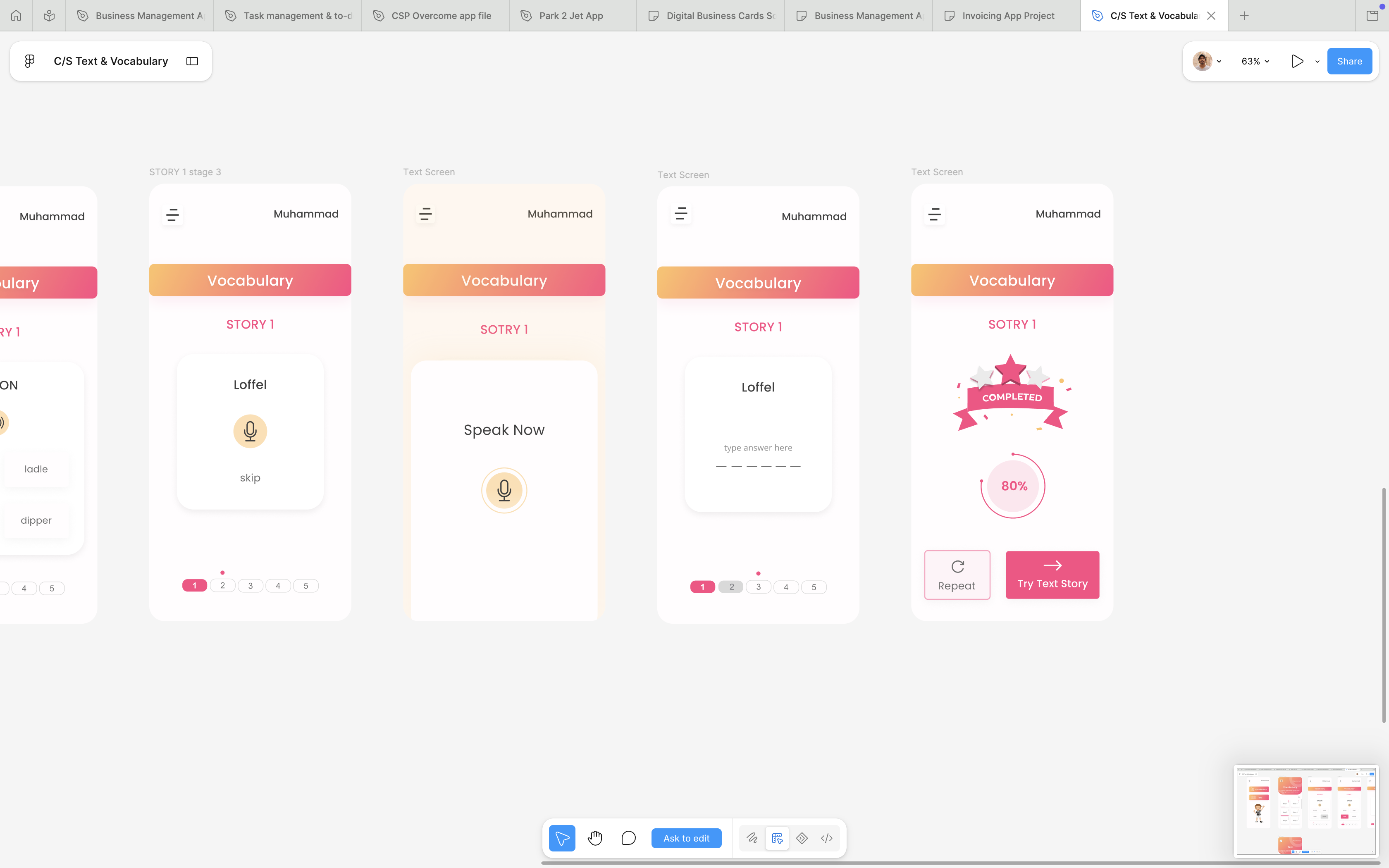
A vocabulary and reading app built to compete in the language-learning space — story-based lessons, speech recognition practice, and progress tracking designed to keep learners coming back daily.
The language-learning category is dominated by a handful of well-known apps, which means a new entrant has to get the fundamentals right from day one — bite-sized lessons, a reason to return daily, and feedback that actually helps someone improve rather than just rewarding taps.
Mia was built around two core practice modes — vocabulary drilling and story-based reading — with speech recognition and typed answers, so learners get real feedback on pronunciation and recall, not just multiple-choice guessing.
Mia was built for a client who wanted a focused language-learning app differentiated by how it teaches — not gamified streaks, but actual reading comprehension and pronunciation feedback. The client's insight was that learners who get real corrections improve faster and stay longer than those rewarded for just showing up. Nurbs.io designed and built the full product around that principle.
Vocabulary organized into stories, with audio playback, speech-recognition practice, and typed-answer checks — so a learner hears, says, and writes each word.
Full story passages with word-level highlighting synced to audio, and tap-to-translate on individual words — built for reading practice, not just vocabulary drills.
Per-story completion percentages and scoring (every vocabulary item practiced three times to reach 100%), giving learners a visible sense of progress.
A simple onboarding flow introducing the "listen, read, practice" loop before asking for an account — reducing friction for first-time users.
Rather than treating pronunciation practice as optional, speech recognition is built into the core vocabulary loop — a learner can speak a word and get checked in the same flow as typing it, instead of pronunciation being a separate, easily-skipped feature.
Vocabulary is grouped into stories rather than flat word lists, so learners practice words in context and get a reading payoff (the full story) once they've worked through its vocabulary — giving the vocabulary grind a clear destination.
Each vocabulary item requires three successful attempts before it's marked complete — not a single correct answer. This mirrors spaced-repetition principles without adding a complex algorithm: learners practice enough times in one session that the word is likely to stick, rather than being marked "done" after a lucky first guess.
Mia's core vocabulary and reading loop is designed around the same daily-habit mechanics that make language apps successful — short sessions, visible progress, and a reason to come back tomorrow.
Getting the fundamentals right — onboarding, daily habit loops, real feedback — is what separates apps that stick from ones that don't.
Start a project →